
A Sermon for Independence Day
The dawn of Independence Day.
It was the early summer of 1776, and the thirteen colonies were caught up in a spirit of independence. Over the course of the past year, the Continental Congress had been steadily cutting the colonies’ political ties to Great Britain. In January, Thomas Paine’s Common Sense hit the newsstands and sold by the thousands. By May, eight colonies had voted to support independence.
It was Richard Henry Lee of Virginia who carried the moment in Congress, presenting a resolution on June 7th that began: Resolved: That these United Colonies are, and of right ought to be, free and independent States, that they are absolved of all allegiance to the British Crown…
A final vote was delayed — some delegates still hoped for reconciliation — so Congress recessed for three weeks. In the meantime, a Committee of Five was appointed to draft a statement making the colonies’ case for independence to the world. John Adams, Roger Sherman, Benjamin Franklin, Robert Livingston, and Thomas Jefferson. Jefferson wrote the draft. By the end of June it was ready.
On July 2nd, the Lee Resolution was adopted by 12 of the 13 colonies. Then came the debate over the declaration itself — spirited, detailed, ongoing — all through the 3rd and into the late afternoon of the 4th. Then, at last, church bells rang out over Philadelphia.
One common misconception: the Declaration wasn’t signed on July 4th. It wasn’t until the document was engrossed — rewritten in a large, clear hand — that members of Congress signed it, beginning on August 2nd. John Hancock placed his famous signature front and center. The others followed, arranged geographically from New Hampshire to Georgia.
Each signature represents extraordinary courage. In the face of an occupying colonial power, these people stood up and declared what they believed:
…We hold these Truths to be self-evident, that all Men are created equal, that they are endowed by their Creator with certain unalienable Rights, that among these are Life, Liberty and the Pursuit of Happiness…
And in declaring the truth they believed, they planted a seed that blossomed into a new, hope-filled nation.
I’ve been wrestling this week with a text for this sermon. That’s called “proof texting” – that is, having a sermon in mind and then looking for a text to prove it. That’s a “no-no” for preaching. But the story of the seventy Jesus followers sent out to heal, cast out demons and preach good news connects me to our nation’s Fourth of July celebration. So “proof text” I shall!
I don’t want to force a connection between sermon and the Luke 10 text. But I do see a common thread.
Both the Scripture and this holiday are, at their core, about courageous people stepping into the dark reality of the world as it is — and declaring an alternate reality. A new reality rooted in divine truth.
Yes, you are oppressed by an unjust colonial power — but God created you to be free!
Yes, your life is broken by sin and sickness and unfairness and even death — but there is a greater reality: God loves you and wants to lift you to new life!
The truest moments of human progress come when someone stands up in the midst of darkness and declares, “I believe in the light!”
Going Ahead of Him
Notice what verse 1 tells us: Jesus sent the seventy ahead of him to every town and place he himself intended to go.
That’s remarkable. These disciples weren’t wandering out into the unknown on their own. They were going as advance scouts — preparing people for the arrival of Jesus himself. When they walked into a village, they were making a way for him.
In the same way, when people of faith step into someone else’s life — a neighbor, a family member, a stranger carrying some heavy burden — do so knowing that Jesus intends to pass that way too. You are going ahead of him, preparing people for his arrival. Your presence, your words, your encouragement and especially your faith can open hearts to receive Christ. And when you go in that confidence – that you are preparing the way for Jesus – new life is born, people change, and sometimes even nations emerge.
The Kingdom Has Come Near
A second thread runs through verses 9 and 11. Jesus tells his followers to declare to those they meet: “The kingdom of God has come near to you!”
One of the questions I’ve wrestled with over the years is why Jesus didn’t heal everyone. Read through the Gospels and count the healings — you may be surprised to find there are fewer than most people assume. And beyond that: what’s the point of a healing if we all ultimately die? That’s the hard question lurking behind the story of Lazarus. Remember him? He was raised from the dead — and then, eventually, Lazarus died again. You can actually visit his tomb in the Holy Land today.
So what’s the point?
The Bible teaches us that Jesus’ healings were signs of the kingdom — visible foretastes of what will one day be. In God’s kingdom, death is not the final word. The dead will be raised. Families will be reunited. Sorrow will turn to joy. The raising of Lazarus was a glimpse of that great promise.
And ever since Jesus gave us that sign, Christians have gathered in hope around the deaths of their loved ones. We mourn our losses but also claim the same promise expressed in the Lazarus story: “I am the resurrection and the life; he who believes in me, though he die, yet shall he live.”
A Table in the Presence of Our Enemies
In a few moments, we’ll gather around the Communion Table — and that table itself is a sign of everything we’ve been talking about.
The 23rd Psalm tells us that God prepares a table before us in the presence of our enemies. Not after the enemies have left. Not once the struggle is over. Right there, in the shadow of whatever oppresses us — the government that feels unresponsive, the sickness that threatens us, the sin that unravels us, the grief that breaks our hearts.
In the presence of our enemies… a table is set.
It’s a sign of God’s presence. A sign that Jesus intends to come to us. A sign that the kingdom is near. A sign that there is a greater reality than the problem we face.
So this week, as we remember and celebrate America’s founding, will you stand up for that greater reality? Will you carry its signs to the people you meet?
The greatest moments of human progress come when someone stands up in the midst of darkness and declares, “I believe in the light!”
That’s how America was born. That’s how new birth happens in people’s lives.
God bless America — and God bless you, for the moments this week when you bring the kingdom near to someone God loves.
FREE! Email Updates!
Never Miss Marty’s Latest Posts
Recent Sermons
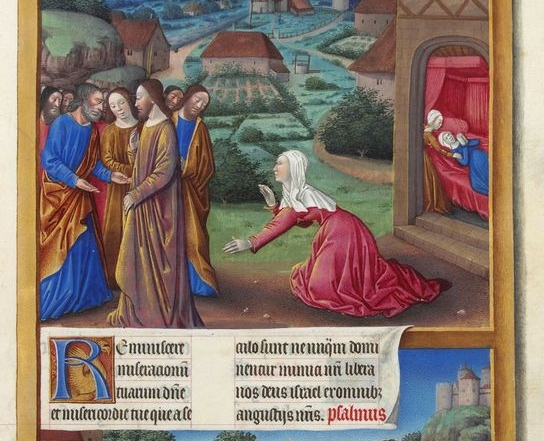
Connecting the Dots – Matthew 15:21-28 (Year A, Proper 15)
Proper 15 (Twelfth Sunday after Pentecost), Year A — Matthew 15:21-28 Connecting the Dots. A Canaanite woman's persistence — and Jesus's own startling response to her — raises the question every generation of Christians has wrestled with: was Jesus truly human, learning and growing as we do? This sermon traces three "dots" Jesus connects that day into a picture of faith that reaches beyond religion, doctrine, and tribe.
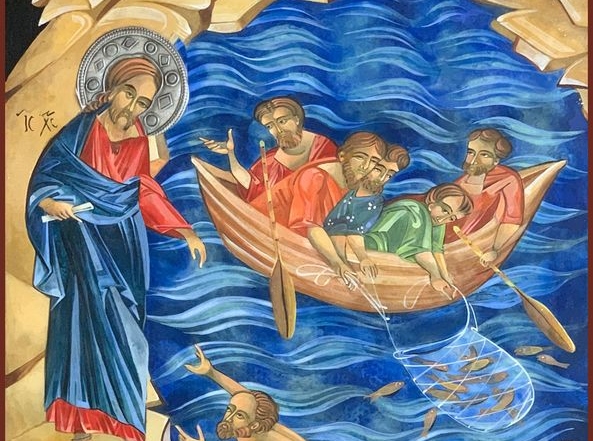
There’s Room in the Boat – Matthew 14:22-36; (Year A, Proper 14)
There's Room in the Boat — When Jesus sends the disciples across a storm-tossed sea, the miracle isn't the destination drama of walking on water — it's the destination itself. Here's a sermon about God's always-reaching grace, the Church as a ship built for rough crossings, and the ministry waiting on "the other side."
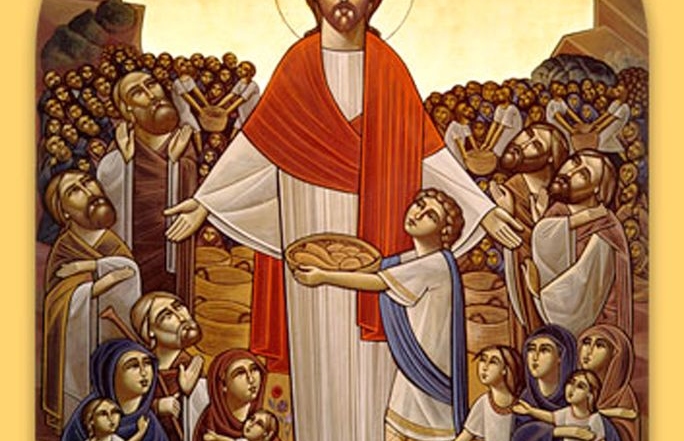
The Power of a Scrap of Bread – Matthew 14:13-21 (Year A, Pentecost 10)
Proper 13 (18) · Tenth Sunday after Pentecost · Year A The Power of a Scrap of Bread — Matthew 14:13-21 When Jesus blesses, breaks, and gives the bread, he turns Communion into a command: "You give them something to eat." A reflection on compassion, absurd math, and the miracle of small things surrendered to God.
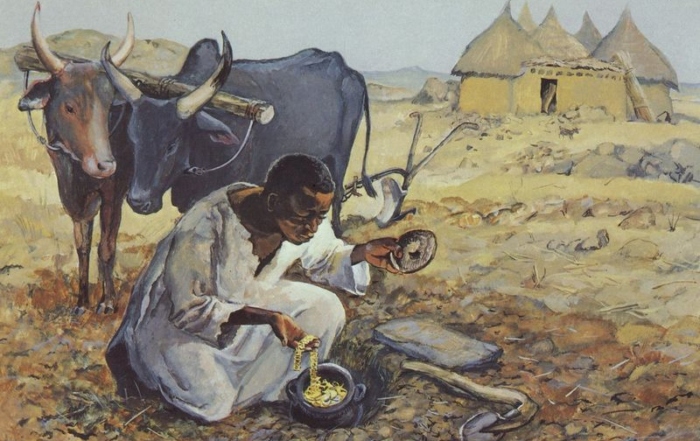
Where is Your God? – Matthew 13:31-33, 44-46 (Year A, Proper 12)
Heaven. Where is it? What is it like? Are you going there? What comes to mind when you think of “heaven”? As a child, I was taught that heaven is “up there.” And “up there,” God — flowing robes, big bushy white beard — sits on a golden throne, with Jesus at his right hand, and angels flying and singing all around, playing their harps. From that great throne room, God watches all of life and rules over the affairs of the universe. So when we hear the word “heaven,” most of us naturally look up. Which is why it’s so interesting that when Jesus spoke about heaven, he made us look down!
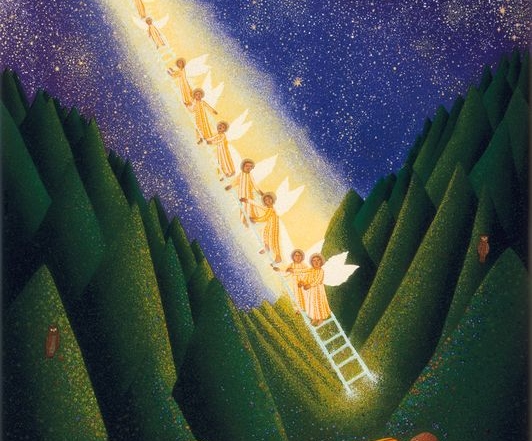
God’s Dream for the Trickster – Genesis 28:10-19a (Year A, Proper 11)
Jacob tells his own story, in his own voice — the trickster on the run, the man who fell asleep on a stone and woke up having met God. A dramatic first-person sermon on dreams, unconditional promise, and the blessings we're meant to pass along.
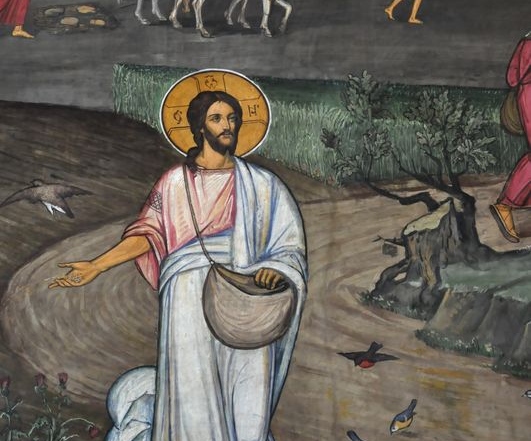
What in the World Does God Think He’s Doing?
God sows like he's got seed to burn. A Proper 10 sermon on grace, extravagance, and the worth of a single soul.
Freedom is For ALL of Us!
Freedom is For ALL of Us! Luke 10:1-11 Reflecting upon this week's celebration of Independence Day, it would be good to remember these words: “We hold these truths to be self-evident, that all men [ON TO THE SERMON!]
A Sermon for Independence Day
A Sermon for Independence Day Luke 10:1-11 The dawn of Independence Day. It was the early summer of 1776, and the thirteen colonies were caught up in a spirit of independence. Over the course [ON TO THE SERMON!]
Praying the Lord’s Prayer Backwards
Jesus taught us to pray "forward" - but most of us lead with Help me, Forgive me, Give me. This free lectionary sermon unpacks the Lord's Prayer in Luke 11:1-13

Waterpeople: A Free Lectionary Sermon on Matthew 10:40-42
What does the Boston Marathon have to do with the Gospel? More than you'd think. A free lectionary sermon on cups of cold water, Heartbreak Hill, and the people God sends to refresh us.